Internal linking is among the least used but powerful SEO techniques that can drastically enhance your website’s search results as well as user-experience. If executed correctly strategically, an internal linking structure assists search engines comprehend the structure of your content, spreads authority on your website across all pages and directs visitors to relevant information. In this thorough guide, we’ll discuss how you can create an effective internal linking strategy to increase the authority of your website.
What is Internal Linking?
Internal linking is the practice of linking an individual page on your website with another in the exact domain. In contrast to external links which point to other websites, internal links form the appearance of a web of connections which assist both the users as well as search engines navigate your web pages more effectively.
For instance, if you hyperlink from your home page to a product page or link from one blog post to another article by creating internal links, you’re creating hyperlinks that improve your site’s structure.
How Internal Linking is Important for SEO
Search engines such as Google make use of internal links to search for new pages, to understand the connection between various types of information, as well as figure out the most relevant pages for your site. Internal linking is essential for building credibility for your site.
Enhances Crawlability and Indexation
Google’s search engine crawls websites by navigating links from one page to the next. A well-designed internal linking system will ensure that your most important pages can be found and be properly indexed. Pages with more internal hyperlinks with them signify greater significance to the search engine.
Distributes Page Authority
Each page on your site is a source of authority, commonly called Link equity or PageRank. If you hyperlink from a high-authority webpage to pages of your website and pass some of the authority. This can help less popular pages to gain ranking authority.
Enhances User Experience
Internal links guide users through your site, allowing them to find related information and spending longer engaging with your website’s content. This decreases bounce rates and improves the chance of conversions.
Establishes Content Hierarchy
The internal link structure of your website communicates search engines what pages are most relevant to them. Pages with more internal links are regarded as more trustworthy and valuable.
The types of internal links
Knowing the different kinds of internal links can help to create an approach that is more strategic.
Navigational Links
They can be found on your primary menus, your footer and the sidebar. They assist users in navigating to the main sections of your website such as your homepage, about page products, services or categories.
Contextual Links
Also called editorial links, they appear naturally in the body content of your webpages. They’re among the best types of internal link due to the fact that they are relevant to the context and offer the reader with genuine value.
Footer Links
Links in the footer of your site. While they are useful for navigation, they generally are not as SEO-friendly as the contextual links.
Breadcrumb Links
These display users’ place in the hierarchy of your website and make it easy to return to your homepage or to the categories that are parent.
Best Strategies for Internal Linking Strategy
Let’s look at practical strategies for optimizing the internal structure of your linking.
Start by conducting a Content Assessment
Before you begin an internal link strategy an exhaustive review of your current content. Determine your most important webpages as well as pillar content and other pages that could be enhanced by internal links. Tools such as Google Analytics and Screaming Frog will help you evaluate the current structure of your link.
Create Pillar Pages and Topic Clusters
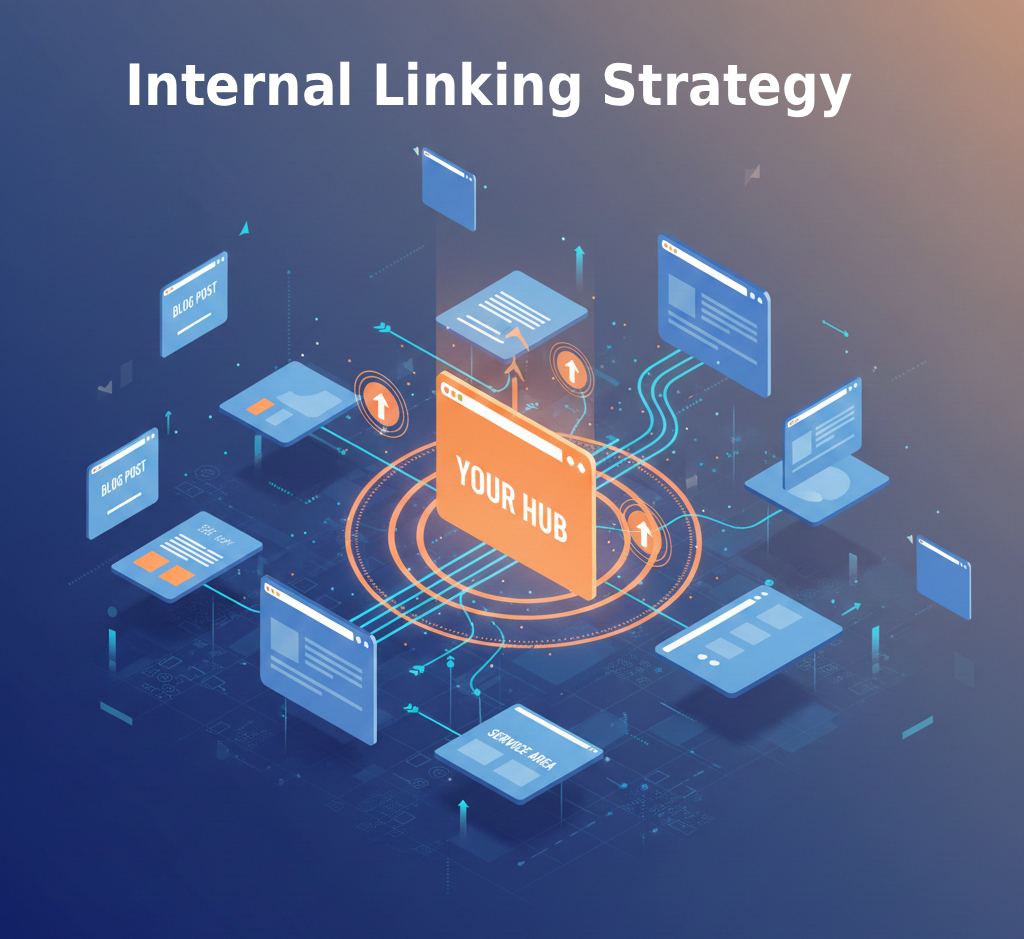
Organise your content around page pillars that are comprehensive in covering broad topics and cluster content that goes deeper into specific subtopics. Link all content from the cluster back to the pillar page that is the primary one, and also link from the page of the pillar to relevant cluster content. This establishes an obvious topical authority structure.
Use descriptive anchor text
Anchor text can be described as the text that can be clicked within the hyperlink. Make sure to use an informative, keyword-rich anchor texts that clearly states the content of the page about. Avoid phrases that are generic like “click here” or “read more.” Instead, you should use genuine, relevant words like “learn more about strategies for keyword research” as well as “our guide to SEO on the web.”
The Link is Deep. It’s Not Only to Pages with Top-Level Content
Do not just link to your home page or main page of category pages. Link users to specific relevant, relevant content that provides value. Deep linking distributes authority throughout your website and enhances accessibility of the entire library of content.
Maintain an Natural Link Ratio
There’s no standard number for the number of internal links you should have on a webpage However, try to find an appropriate balance. In case you’re not using enough links, you lose opportunities to assist users and spread authority. Too many links may diminish the importance of each one and overwhelm users.
Prioritize Relevance over Quantity
Make sure to only hyperlink to pages which are truly pertinent to your content on the moment. Inappropriate or forced links could cause confusion for users and weaken search engine optimization efforts. Quality is always the top priority in internal linking.
Update old content with new Links
If you are publishing new content, you can go back to earlier posts and then add hyperlinks to your latest articles. This helps keep your content current and increases the visibility of the new content, as well as improves links throughout your entire structure.
Repair broken internal links
Make sure you regularly check your website to check for damaged internal links by using tools such as Google Search Console or Ahrefs. Broken links can lead to dead ends which frustrate users and create a waste of the equity in your link.
Utilize an organized structure for your site
Organise your website according to an orderly manner with clearly defined subcategories and categories. The internal links you use should be reflected in the structure of your website making it simple for users as well as search engines to see the relationship between your website’s content and the other.
Common Linking Mistakes in Internal Linking to Avoid
Even seasoned webmasters make mistakes when it comes to internal linking. There are some pitfalls to look for.
Over-Optimization
The use of the identical anchor text that is keyword rich may appear to be manipulative for search engines. Alternate the anchor text naturally, but being descriptive and relevant.
Linking to irrelevant pages
Making links to link weakens your overall strategy. Each internal link must serve with a purpose and give an actual benefit to your readers.
We are ignoring Orphan Pages
Pages with orphans are those that have no internal links linking to them. They are hard the search engine to find and, in most cases, do not show up when it comes to search result. Locate and link to abandoned pages so that they can be integrated into the structure of your website.
Utilizing No-Follow Tags for internal links
If there’s no reason to do so that is not a reason, internal links should follow links that are able to be trusted. Utilizing no-follow tags on your internal links impedes the flow of link equity, and can harm SEO efforts.
Tools to help with internal Linking
A variety of tools can help you streamline the internal linkage process and help find opportunities.
Google Search Console
Utilize”Links,” or the “Links” Report to find out which pages have the highest number of internal links. You can also determine which pages might require more support from links.
Screaming Frog SEO Spider
This powerful crawling tool can help you examine your website’s link structure, detect broken links, and identify pages that are abandoned.
SEMrush or Ahrefs
These complete SEO platforms include internal analysis of linking which show you the distribution of links and anchor text usage and the potential for improvement.
WordPress Plugins
If you’re using WordPress plugins, such as Link Whisper, Yoast SEO and Rank Math can suggest internal link opportunities and automate certain aspects in the procedure.
Monitoring the success of internal linking
To ensure that your internally linked strategy functioning to ensure your internal linking strategy is working, keep track of these important metrics.
Organic Traffic Growth
Check if pages that receive more internal links experience improvements in organic traffic over time.
Page Authority Improvements
Utilize tools such as Moz and Ahrefs to monitor the progress of the page’s authority score for websites you’ve linked to strategically.
Crawl Depth
Examine how many times it takes to access different pages from your home page. The ideal is for important pages to be accessible in just three clicks.
Pages and Time on Site per Session
The improved internal linking will bring more visitors to your pages and spending more time on your site.
Conclusion
A well-planned internal linking strategy is vital to building your site’s credibility and improving SEO performance. By creating a clear web structure by using anchor text that is descriptive while prioritizing relevancy, and regularly monitoring your links, you will assist search engines to understand your site’s content better and provide the best user experience.
Be aware that internal linking isn’t just a once-in-a-while task, but it is a continuous process. As your website grows and you release new content, you must constantly refine the internal link strategy in order to increase the impact of your strategy. Begin to implement these strategies now and you’ll be able to see tangible increases in your site’s authority in search engine rankings, as well as overall performance.