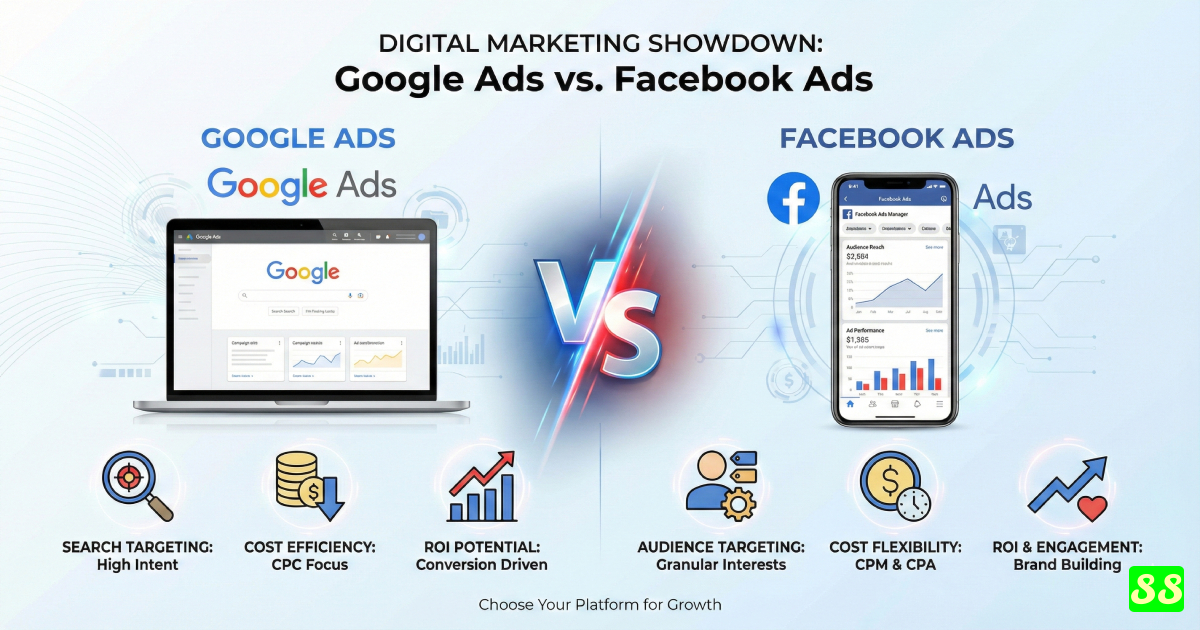
Introduction – Google Ads vs Facebook Ads
Your marketing budget can be made or broken by choosing the right advertising platform. Google Ads and Facebook Ads are the most popular debates among marketers and business owners when it comes to online marketing. Both platforms have unique advantages, but is one better for your business than the other? This complete comparison will help you to make the best decision for your marketing goals.
Understanding the differences between these advertising giants, whether you are a small-business owner, a brand that is already established, or a startup, is essential to maximize your return on investment.
What is Google Ads?
Google Ads is a platform for online advertising developed by Google. It allows businesses display ads on Google Search Results, YouTube, and thousands of websites across the Internet. Relevant ads appear when someone searches on Google for a particular product or service.
How Google Ads Work
Google Ads is a pay-per click model. Advertisers bid for specific keywords that relate to their business. Google holds an auction when users search for these keywords to determine which ads appear. You only pay if someone clicks your ad.
The platform uses a system of quality scores that takes into account the relevance of your ad, the quality of your landing page, and the expected click-through rates. Higher quality scores can result in lower costs and better ad placements.
Google Ads Campaigns Types
Google Ads offers a variety of campaign types to meet different business objectives.
Search ads appear on top of Google results when users search specific keywords. These are text ads that match the user’s search queries.
Display Ads is a visual banner ad that appears on websites within Google Display Network. These are excellent for brand awareness, and reach audiences across millions websites.
Shopping ads display product images, prices and store names directly within search results. These are ideal for ecommerce businesses.
Video ads are displayed on YouTube and other video partner sites. These ads can be displayed before, during or after videos.
What is Facebook advertising?
Facebook Ads is an advertising platform that includes Facebook, Instagram Messenger and Audience Network. Businesses can create highly targeted ads using user demographics, preferences, and behaviors. Facebook’s platforms have over 3 billion users, giving advertisers a huge reach.
How Facebook Ads Work
Facebook Ads is different from Google Ads. Facebook ads are not based on searches, but rather on user profiles, online behavior, and interests. This is known as interruption marketing, because ads appear when users are browsing their feeds.
The platform uses a similar auction system to Google, however targeting is based more on user activity and demographic data than search intent. Advertisers can create audience segments in order to target specific groups.
Types of Facebook Ad Formats
Facebook offers a variety of ad formats that engage users across the family of apps.
Image Ads appear as simple images in news feeds. These are simple to create and are a good fit for most businesses.
Video Ads grab attention with moving content. Depending on your campaign goals, these can be short clips or even longer videos.
Carousel ads let you showcase multiple images or video clips in a single advertisement. Users can swipe to see different features or products.
Stories ads are full screen vertical ads that appear in between user stories on Facebook or Instagram. These create immersive experiences.
Instagram Ads integration means that your Facebook ads will automatically run on Instagram. This allows you to expand your reach across both platforms.
Google Ads vs Facebook Ads Key Differences
Understanding the fundamental differences is key to making the right decision.
User Intent: Search vs Discovery
The most important difference is the user’s intent. Google Ads targets users actively searching for solutions. When someone types in “buy running shoe online”, they are highly motivated to make a purchase. Your ad will reach people who are ready to act.
Facebook Ads target users based on demographics and interests, not active searches. Users browse their feeds to find entertainment or social connections. Your ad interrupts the user’s browsing experience. This is a great way to create awareness and introduce new products.
Comparing Targeting Capabilities
Both platforms are powerful, but they operate differently. Google focuses on keyword targeting and remarketing for people who have visited your website. Facebook excels in demographic and interest-based targetting using the vast amount of data it collects through user profiles and behaviors.
Google knows what people search for right now. Facebook knows what people like, who they are, and how they behave on the internet. This fundamental difference shapes the way each platform delivers results.
Ad Formats and Placements
Google Ads uses primarily text-based search advertisements, although display and video ads are also available. The main focus is to match user queries with relevant ads. Placements include search engine results, partner sites, and YouTube.
Facebook Ads is a visual platform that emphasizes images and videos. The platform is designed for engaging, eye-catching creativity. Placements are available across Facebook feeds and Instagram, Stories, Messenger and the Audience Network.
Budget and Bidding Models
Both platforms use auction based bidding systems. Google Ads usually requires higher budgets when competing keywords are used, especially in industries such as legal services or insurance. The high intent often leads better conversion rates.
Facebook Ads has lower entry fees and allows you to begin with a smaller budget. You can run successful campaigns with as little as a few dollars a day. This platform is more accessible to businesses with limited budgets.
Cost Comparison: Which is cheaper?
When choosing a platform for advertising, cost is always an important factor. Answers vary depending on your industry, the competition and campaign goals.
Average CPC (Cost per Click) Rates
Google Ads usually has higher CPC rates because users are more likely to be searching. The average CPC for all industries is between $1 and $2, but in competitive industries, the cost per click can be $50 or more.
Facebook Ads offer lower CPC rates than most other advertising platforms. The average CPC rate is between $0.50 and $1.00 for most industries. The lower intent results in cheaper clicks but you may require more clicks to convert.
Average CPM (Cost per Thousand Impressions).
CPM pricing is important when you run awareness campaigns. Facebook Ads offer lower CPM rates ranging between $5 and $15 per thousand impressions. This makes it cost effective for reaching large audiences.
Google Display Network CPMs are comparable, but they vary greatly based on placements and targeting. YouTube video ads are typically more expensive but they deliver engaged viewers.
Industry-Wise Cost Breakdown
Costs vary greatly by industry
- Ecommerce: Facebook often benefits from lower costs and visual product display
- Professional services: Google dominates high-intent searches
- Both Google and Facebook are effective in capturing users.
- Google Ads for Healthcare perform better than other ads due to the search intent
- Fashion and lifestyle: Facebook excels at visual storytelling
Platform selection and budget allocation should be based on your industry and target audience.
Google Ads vs Facebook Ads: Targeting options
Targeting is the key to reaching your ideal customers. Both platforms have sophisticated options but different approaches.
Google Ads targeting features
Google Ads offers several targeting options to reach the right audience.
Google search ads are built on keyword targeting. You select keywords that are relevant to what your customers search for. This will put your ads in front people who are actively searching for your products or service.
Location targeting allows for you to show ads only to people who live in certain countries, cities, regions or even a custom radius around your business. This is ideal for local businesses.
Device Targeting allows you to adjust bids and show different ads depending on whether the user is on a mobile, desktop or tablet device.
Audience Remarketing tracks visitors to your website and shows ads as they browse on other sites. This keeps your brand in front of potential customers and helps them return.
Facebook Ads Targeting Features
Facebook’s targeting abilities are extremely detailed. They use the wealth of information that users share on their platform.
Demographic targeting includes gender, age, education level, job title and relationship status. You can be very specific about who will see your ads.
Interest based targeting targets people based on their interests, favorite brands, the activities they participate in, and the pages they like. Facebook tracks user interest across the platform.
Behavior Targeting focuses primarily on purchasing behaviors, device usage patterns, travel patterns, etc. This allows you to reach people who are likely to take certain actions.
Lookalike Audiences allows Facebook to find people who are similar your existing customers. This allows you to reach more high-quality prospects.
Custom Audiences allows you to upload customer lists, target visitors to your website, or reach people that engaged with your content. This creates highly targeted audience segments.
Which platform has a better ROI?
Advertising success is ultimately measured by the return on investment. Your business type and goals will determine the answer.
Conversion Rates Comparison
Google Ads usually have higher conversion rates, as users are more likely to be interested in purchasing. Search ads can have conversion rates of between 3% and 5%. Some industries even reach higher levels.
Facebook Ads have lower conversion rates, usually averaging between 1% and 2%. Facebook is a great tool for creating email lists, generating new leads, and raising awareness.
It is important to match your platform with your goals. Google is often the best choice for immediate sales. Facebook excels at building audiences and nurturing relationships.
Sales Funnel Performance
Google Ads work best at the bottom, when customers are ready and willing to buy. People who search “buy laptop online”, are close to making a purchasing decision.
Facebook Ads are most effective at the top of the funnel and in the middle. It introduces people your brand, educates and builds trust with them over time. It is a great way to warm up cold audiences.
Many successful businesses use the two platforms at different funnel stages to maximize their effectiveness.
ROI Data by Industry
Different industries have different results:
- Local Services: Google Ads deliver 3-5x ROI.
- Ecommerce Fashion : Facebook Ads often return 2-4x ROI
- B2B software: Google Ads + Facebook remarketing for search terms works best
- Restaurants : Both platforms work well with Google capturing “near Me” searches
- Online Education : Facebook’s detailed targeting often results in better ROI
Test both platforms to see which one is more effective for your business.
When Should You Use Google Ads
Google Ads may not be right for all businesses. Here are some situations where it works.
Best Industries for Google Ads
Google’s search-based business approach is beneficial to certain types of businesses.
Local Services such as plumbers, electricians and locksmiths get excellent results. Google is the first place people go when they have an urgent need. These high-intent users are attracted to the top of the search results.
Google is effective for B2B businesses that sell services or software to companies. Google is often the first place that decision-makers look for solutions to their business problems.
Google’s search ads are a great way to advertise products with high intent, such as insurance, legal service, home repairs, and other emergency services. These people are searching for immediate needs with a strong purchase intention.
Real-World Google Ads Examples
A local plumbing business spent $2,000 per week on Google Ads, and generated $15,000 of new business. Searching for “emergency plumbing near me” brought in dozens high-value clients.
Google Ads was used to target specific course titles by an online education platform that focuses on certification courses. They achieved a $30 cost per acquisition, while their customer lifetime value is $500. This resulted in profitable growth.
A law firm that specializes in personal injury ads invested heavily in Google search advertisements. The high cost of clicks of $40-60 was offset by the high value of clients, resulting in an average ROI 400%.
When Should You Use Facebook Advertising?
Facebook Ads is best used in certain scenarios and with certain business models.
Best Industries for Facebook Advertising
Facebook’s visual and interests-based approach favors certain industries
Facebook Ads are a great way to advertise for Ecommerce businesses that sell physical products. The platform’s visual nature makes products look stunning. Carousel ads are a great way to display product catalogs.
Facebook is a great place for B2C companies that are more focused on consumers than businesses. The massive user base of the platform and its detailed targeting helps brands find their ideal clients.
Lifestyle products such as fashion, beauty, fitness and home decor, as well as food, see strong results. These visually appealing products do well in Facebook’s feed environment.
Real-World Success Examples of Facebook Ads
A clothing online store spent $5,000 in Facebook Ads, and generated $25,000 worth of sales. They used carousel advertisements to showcase their latest collection, and targeted women aged between 25-40 who were interested in fashion.
A fitness coach built a business entirely using Facebook Ads. She grew her email subscriber list to 50,000 by targeting people who were interested in healthy living and weight loss.
A local restaurant used Facebook ads to promote events and special offers. With just $300 per month budget, they filled their venue consistently on slow weekdays. They also built a loyal community of customers.
Google Ads: Pros and Cons
Each platform has its strengths and weaknesses. What you need to know about Google Ads
Google Ads: Benefits
Google Ads has many compelling benefits.
When people click on your ads, they are looking for what you have to offer. This leads to higher conversion rates and more qualified lead.
You can reach virtually any audience with the help of Google Search, YouTube and the millions of websites that are partners.
Results can be measured with detailed analytics. This will show you exactly which keywords, ads and campaigns are driving results. You can track the return on every dollar you spend.
You can get traffic within hours after launching your campaign. You don’t have to wait for organic search rankings.
Google Ads: Disadvantages
Google Ads has its own drawbacks.
Small businesses can struggle to compete in industries with high costs. Legal, insurance and financial keywords can cost more than $50 per click.
Beginners often waste money on expensive products before they figure out what works. The platform is full of features and options which require expertise.
Click fraud is still a problem. Competitors or bots will click on your ads and waste your budget. Google offers some protections but they are not perfect.
Successful campaigns require constant monitoring, testing and optimization. You can’t just set it up and forget about it.
Pros and cons of Facebook ads
Facebook Ads comes with its own set advantages and limitations.
Facebook Ads: Benefits
Facebook Ads provides unique benefits:
Advanced targeting options allow you to reach extremely specific audiences based upon demographics, interests and behaviors. This level of detail is not available on any other platform.
Facebook is now accessible to businesses with limited budgets. You can begin testing Facebook with as little as a few dollars a day.
Visual advertising formats engage users through images and videos. This is ideal for brands that have visually appealing products or creative content.
As people see your ads on their feeds, brand awareness is built naturally. Even if people do not click, you remain in their minds.
Facebook Ads: Disadvantages
Facebook Ads has its own challenges.
Intent traffic is lower when people aren’t actively searching for your product. This can lead to lower conversion rates in direct sales.
Ad fatigue is a result of users seeing the same ads over and over again. To maintain performance, you need to continually refresh your creative.
Platforms are frequently updated, and algorithm updates as well as policy changes can affect campaign performance. What works today might not work tomorrow.
iOS updates and privacy concerns have limited tracking capabilities. This makes it difficult to measure ROI and retarget effectively.
Can you use both Google and Facebook ads together?
The best results are often achieved by combining both platforms.
Integration Strategies
Smart marketers combine Facebook and Google Ads to cover the entire funnel.
Use Facebook Ads to introduce yourself to cold audiences near the top of the funnel. Engaging content and offers will help you build awareness and interest.
Use Google Ads at the bottom of your funnel to capture people who are actively searching for solutions. Convert traffic with high intent into customers.
Implement cross-platform remarketing, where Facebook reminds users who searched on Google and did not convert. Google captures those who engaged with Facebook content but needed more convincing.
Budget Allocation Tips
Divide your budget between platforms strategically:
Start by focusing 60% of your efforts on the platform which is most natural for your business, and 40% on testing the other. Adapt based on data.
Consider a 50/50 split between Facebook and Google in e-commerce for new customer acquisition. Google is responsible for branded searches and keywords with high intent.
If search volume is high, Google should be your first choice for services (70/30), but Facebook can be used to remarket and raise awareness.
Reserve 10-20% of the budget to test new audiences, creative, and approaches on both platforms.
Cross-Platform Remarketing
Remarketing is a powerful tool that reaches potential customers on multiple platforms.
Facebook Pixel allows you to retarget website visitors via Facebook ads. This allows you to reinforce your message across all platforms.
Google remarketing lists allow you to capture people who have engaged with your Facebook content. By tracking website visitors and showing them search ads as they look for solutions, these people can be captured.
Email list custom audiences allows you to upload customer emails on both platforms and create consistent messaging across all digital touchpoints.
Final Verdict: Which one should you choose?
Your business goals, resources, and situation will determine the answer.
Start with Google Ads if you are a local business that offers services or sells products with high intent. Search intent will likely produce better immediate results.
Facebook Ads are a great place to start if you’re building a lifestyle or visual brand, selling products, or you have a limited budget.
For established businesses that have a healthy marketing budget, using both platforms together maximizes your marketing effectiveness.
Consider your customer journey. Where do your customers find solutions? How long does your sales cycle last? What is your profit per sale? These factors should guide you in your decision.
Start with one platform and master it. Then, once you have proven your success and mastered the fundamentals of paid marketing, expand to another.
Conclusion
Both Google Ads, and Facebook Ads, are powerful advertising platforms that have unique strengths. Google Ads is the best at capturing search traffic with high intent, which makes it ideal for products and services that people actively search for. Facebook Ads are the best at targeting specific audiences, creating brand awareness, and visual storytelling.
The best option depends on your business, target audience and marketing goals. Many successful businesses use both platforms to cover the entire customer experience from awareness to conversion.
Start by testing the platform that best aligns with your business model. Track your results, optimize consistently and expand to other platforms as you demonstrate success. Remember that paid marketing is a skill you can improve with practice and data driven decision making.
Are you ready to start advertising? Take action now and choose the platform that best suits your business goals.
FAQs about Google Ads vs Facebook Ads
Which is better for beginners?
Facebook Ads is easier for beginners to use due to its simple interface and lower budget requirements. You can learn with as little as $5-10 per day. Google Ads is more difficult to learn and requires a larger budget for meaningful results.
Which platform is the cheapest?
Facebook Ads are typically cheaper than other advertising methods, with lower costs per click and cost per impression. This makes it easier to reach large audiences. However, cheaper clicks do not always mean better ROI. Google Ads can often deliver higher conversion rates, despite higher costs, because users have a stronger purchase intention.
Can I run both simultaneously?
Both platforms can be used together to achieve the best results. Use Facebook to build awareness and remarketing while Google captures search traffic with high intent. This ensures that your advertising is effective and covers the entire funnel.
Which has better targeting?
Both platforms offer excellent targeting but in different ways. Facebook offers more detailed demographic and interests-based targeting options. Google offers better keyword-based targeting based on intent. The “better option” depends on whether or not you want to reach people by identifying them based on their search terms or who they are.
What is the minimum budget needed?
Facebook Ads are affordable for small businesses, and can be run with as little $5-10 per day. Google Ads requires a minimum of $20-50 per day to collect meaningful data and see results. However, competitive industries may require more.