The technical SEO is the foundation of your website’s performance in search engines. Even the best content will struggle to rank without it.
This guide will walk you through 25+ steps that can be taken to optimize the technical foundation of your website. You’ll discover how to fix issues, increase site speed and make it easier for search engine crawlers to index your website.
These techniques are effective whether you have an online store or blog. Let’s begin with the basics.
What is technical SEO?
Technical SEO is the process of optimizing your site’s infrastructure to make it more search engine friendly. It helps Google understand and index your web pages.
Technical SEO is different from content SEO because it focuses on backend elements. Site speed, mobile responsiveness and security are among them.
Why is technical SEO important in 2026? Google’s algorithm prioritizes the user experience now more than ever. Sites with fast loading times and smooth operation are ranked higher. Sites that have technical errors are pushed down.
Most technical SEO problems are easy to fix.
Core Web Vitals Optimisation
Understanding Core Web Vitals
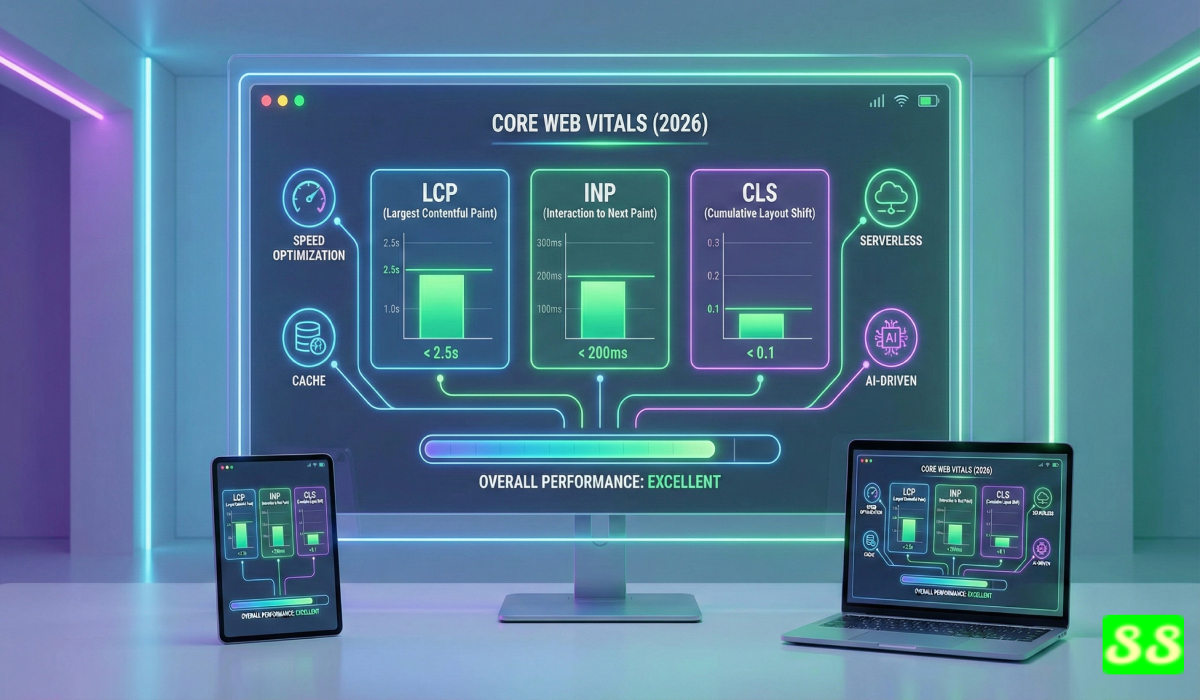
Google measures the user experience by three Core Web Vitals
- The largest contentful paint (LCP) is measured by the loading speed
- Cumulative layout shift (CLS) is a measure of visual stability
- Interaction with Next Paint (INP), a measure of responsiveness
These metrics directly affect your ranking. Sites that fail Core Web Vitals test lose traffic to their competitors.
PageSpeed Insights and Google Search Console will give you a score.
How to Improve LCP
LCP should happen within 2.5 seconds. How to achieve it
- Compress images into WebP format
- Remove JavaScript and CSS
- Use a content delivery network (CDN)
- Activate lazy loading of images
- Upgrade to faster hosting
- Reduce server response times
Make sure the largest element of your page loads before anything else. Make sure your page is optimized.
Reduce CLS
CLS measures unexpected changes in layout. A score of less than 0.1 is ideal.
Fix layout shifts using:
- Set the size attribute for images and video
- Reserve space for ads to load before they appear
- Avoiding content injection above existing content
- Use font-display to swap web fonts
- Preloading key resources
Test your pages on mobile devices. Mobile sites have lower CLS scores.
Optimizing INP
In 2024, INP will replace First Input Delay. It measures the speed at which your website responds to user interaction.
Aim for an INP of less than 200 milliseconds
- JavaScript Tasks can be broken into smaller parts
- Remove third-party scripts
- Use web workers to perform heavy calculations
- Reduce main thread work
- JavaScript non-critical code can be deferred
Chrome DevTools, Real User Monitoring Tools and Chrome DevTools are all tools that can be used to monitor INP.
Website Performance and Speed
Page Loading Time Optimization
You should be able to load your pages in less than 3 seconds. Each additional second will cost you conversions.
Measurement is the first step in speed optimization.
- Test GTmetrix
- Google’s Mobile Friendly Test allows you to test your mobile speed.
- Monitor real user data in Search Console
The majority of speed issues are caused by bloated codes and unoptimized content.
Image Optimization Techniques
Images can account for up to 50% of the page weight. You can optimize them by:
- Convert JPGs, PNGs and WebP
- Resize images for display dimensions
- Compress images up to 80-85% of their original quality
- Use responsive images using srcset
- Implement lazy loading
- Use images from a CDN
Compression is easy with tools like TinyPNG or Squoosh.
Implementation of Browser Caching
Browser caching caches static files locally. Returning visitors load your site faster.
Set cache headers for:
- Images: 1 Year
- CSS and JavaScript: One year
- HTML in 1 hour or Less
Add these rules to the.htaccess or server configuration.
CDN Setup & Configuration
CDNs deliver your content to users from the closest servers. It improves the speed of content and reduces latency.
Popular CDN Options
- Cloudflare offers a free tier.
- Amazon CloudFront
- Bunny CDN
- KeyCDN
Configure your CDN cache to cache static assets such as images, CSS and JavaScript files.
Mobile-First Indexing Checklist
Test Mobile Responsiveness
Google indexes mobile versions of websites. Your mobile website must be flawless.
Test responsiveness on mobile devices
- Google’s mobile-friendly test tool
- Check on real devices (iPhone, Android)
- Test different screen sizes
- Check that the spacing between touch elements is adequate
- Text should be readable even when zoomed out
The content on your mobile device and desktop should be the same. Hide content from mobile devices to improve your ranking.
Best Practices for Mobile Usability
Users expect mobile navigation to be fast and easy.
- Use large, tappable buttons (minimum 48×48 pixels).
- Interstitials, pop-ups and other intrusive ads should be avoided
- Forms that are easy to fill out and compatible with auto-fill
- Use font sizes that are readable (16px minimum).
- Use thumb navigation to navigate.
- Remove horizontal scrolling
Test your checkout process using mobile. Poor mobile UX is responsible for many lost sales.
Accelerated Mobile Pages
AMP generates stripped-down versions for instant loading. AMP is still beneficial to news and blogging sites, even though it’s less popular.
Consider AMP If:
- You can publish content that is time-sensitive
- Mobile traffic is the new audience
- Your website is content-heavy
A well-optimized, responsive design is better for most sites than AMP.
Website Indexability and Crawlability
Sitemap Optimization Using XML
Search engines crawl your sitemap to determine which pages they should index. Submit your sitemap through Google Search Console or Bing Webmaster tools.
Sitemap best practices:
- Include only indexable Pages
- Noindex Tags on Pages: Remove them
- Exclude duplicate content
- Update sitemaps automatically
- Split large sitemaps over 50,000 URLs
- Lastmod dates can be added to fresh content
Check your sitemap at yoursite.com/sitemap.xml.
Configuration of Robots.txt
The robots.txt files controls which pages are crawled by search engines. Google will block your site if you make a mistake.
Robots.txt Rules:
- Access to CSS and JavaScript Files
- Block login and admin pages
- Allow duplicate content
- Search results pages blocked
- Access to vital resources
Test your robots.txt file in Search Console under Coverage > robots.txt Tester.
Fixing Crawl errors
Crawl errors can prevent Google from gaining access to your pages. Common errors include:
- Error 404 (page not Found)
- 500 errors (server errors)
- Redirect chains
- Timeout errors
Search Console, Coverage. Fix broken links immediately. Create 301 redirects when pages are moved.
Canonical Tags Implementation
Search engines can identify the original version of a web page by using Canonical tags. This helps to avoid duplicate content.
Use canonical tags whenever:
- Multiple URLs for product pages
- Content is categorized in more than one category
- There are HTTP and HTTPS versions
- Syndicate content on other sites
Each page should contain a canonical tag that points to itself.
Site Security with HTTPS
SSL Certificate Installation
HTTPS encrypts all data sent between your server and the users. Google demands it for all websites.
You can get a free SSL Certificate from Let’s Encrypt, or your hosting provider. Most hosts automatically install SSL certificates.
Verify HTTPS configuration:
- Look for the padlock symbol in your browser
- Test at SSL Labs
- All internal links should be HTTPS.
- Update external links whenever possible
Mixed Content Issues
When HTTPS pages load HTTP resource, mixed content is created. Browser warnings are triggered and security issues arise.
Fix mixed content:
- All internal links should be updated to HTTPS
- Replace HTTP with HTTPS resources
- Use protocol-relative links (//)
- Check for third-party widgets and scripts
Find any remaining problems by searching for “http://” in the source code of your website.
Installing Security Headers
Security headers will protect your website from attack. Use these headers to protect your site.
- X-Content-Type-Options: nosniff
- SAMEORIGIN
- X-XSS-Protection: 1; mode=block
- Strict-Transport-Security
- Content-Security-Policy
Add headers to your server configuration, or through a security plug-in.
Structured Data and Schema Markup
Types of Schema Markup
Schema markup helps search engines understand your content. It enables rich results in search.
Common schema types:
- Article schema for blog posts
- Product schema for e-commerce
- LocalBusiness schema for local companies
- FAQ schema for question pages
- Review schema for testimonials
- Recipe schema for cooking sites
- Event schema for calendars
Choose schema types matching your content.
Implementing JSON-LD
JSON-LD is Google’s preferred schema format. Add it to your page’s head section.
Example Article schema:
{
  "@context": "https://schema.org",
  "@type": "Article",
  "headline": "Technical SEO Checklist 2026",
  "author": "Your Name",
  "datePublished": "2026-01-15"
}
Generate schema markup at Schema.org or Technical SEO tools.
Testing Structured Data
Test your schema implementation:
- Use Google’s Rich Results Test
- Check Search Console’s Rich Results report
- Validate at Schema.org validator
- Monitor for errors and warnings
Fix any errors before deploying to production.
Rich Snippets Optimization
Rich snippets increase click-through rates by 20-30%. They show extra information in search results.
Optimize for rich snippets:
- Add star ratings to product pages
- Include pricing and availability
- Add FAQ sections with FAQ schema
- Use HowTo schema for tutorials
- Implement Breadcrumb schema
Monitor your rich results performance in Search Console.
URL Structure and Site Architecture
SEO Friendly URL Best Practices
Clean URLs can improve user experience and rankings.
Create SEO-friendly URLs
- Keep URLs short. (Under 60 characters).
- Separate words with hyphens
- Include keywords in your search
- Use lowercase letters
- Avoid using special characters and numerals
- Make URLs descriptive, readable and easy to understand
Example: yoursite.com/technical-seo-checklist instead of yoursite.com/page?id=123
Internal Linking Strategy
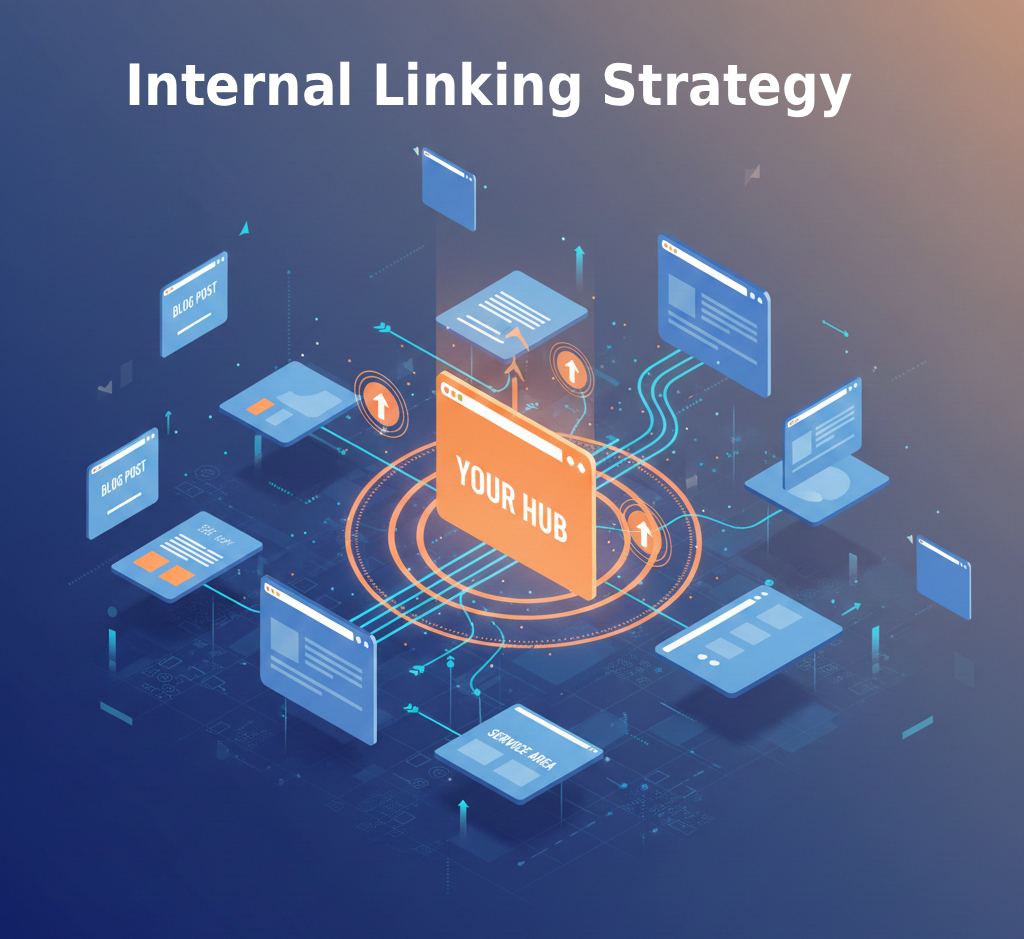
Internal links are used to distribute authority on your website. Search engines can better understand your site’s hierarchy by using internal links.
Internal Linking Techniques
- Link to new content from pages with high authority
- Use descriptive anchor text
- Add contextual links to content
- Create topic clusters using pillar pages
- Related Posts
- Update your old posts by adding links to the new content
Aim to have 3-5 internal links on each page.
Breadcrumb Navigation
Breadcrumbs help users find their way around your website. Breadcrumbs improve navigation, and they provide structure to search engines.
Breadcrumb benefits:
- Reduced bounce rate
- Better crawlability
- Rich search results
- Improved user experience
Use schema to markup breadcrumbs.
Site Hierarchy Optimization
Organize the site using a logical hierarchical structure. The homepage should be within 2-3 clicks of the most important pages.
Build your website:
- Main categories linked to the homepage
- Subcategories are linked to the categories
- Links to subcategories on individual pages
- Create an architecture that is flat (not too deep).
- All pages must be accessible
Use a visual tool for your sitemap to audit the structure.
JavaScript SEO for 2026
Rendering Strategies
JavaScript-heavy sites need special SEO consideration. Search engines have trouble with JavaScript.
Select the best rendering method
- Server-Side Rendering (SSR): Best for SEO
- Static site generation (SSG) is fast and SEO-friendly
- Client-Side Rendering (CSR): Requires careful optimization
- Hybrid approaches: mix of SSR and COS
URL Inspection Tool: Test the rendering of your page by Google.
Dynamic Content Optimization
The dynamic content is loaded after the initial page render. Search engines should be able to find it.
Optimize dynamic content
- Server-side rendering of critical content
- Pre-render important pages
- Dynamic rendering for bots
- Users can now add loading indicators to their devices
- Test JavaScript with JavaScript disabled
Search Console allows you to monitor the content that has been indexed.
JavaScript Frameworks SEO
Popular frameworks require different approaches:
- Next.js: React to SSR
- Nuxt.js is the best choice for SSR in Vue
- Angular: Enable Universal Angular
- Plain JavaScript: Minimize client-side rendering
Each framework includes SEO plugins as well as best practices.
International SEO and Hreflang
Hreflang Tag Implementation
Hreflang tags tell search engines which language version to show users. They prevent duplicate content issues across languages.
Hreflang syntax:
<link rel="alternate" hreflang="en" href="https://example.com/" />
<link rel="alternate" hreflang="es" href="https://example.com/es/" />
Rules for hreflang:
- Include a self-referencing tag
- Add an x-default tag for unlisted languages
- Use correct language codes (ISO 639-1)
- Implement bidirectional tags
- Apply to all page variations
Multi-language Site Setup
Multi-language sites need careful planning:
- Use subdirectories (/es/, /fr/) for most sites
- Consider subdomains (es.example.com) for large sites
- Avoid country-code domains unless targeting specific countries
- Translate all content, not auto-translate
- Localize currency, dates, and measurements
Test each language version separately.
Geo-Targeting Configuration
Set geographic targets in Search Console for country-specific content.
Geo-targeting tips:
- Use country-specific domains (.co.uk, .de)
- Host on local servers when possible
- Get local backlinks
- Create location-specific content
- Add local business schema
Monitor performance by country in Analytics.
Tools for SEO Audit
Google Search Console Essentials
Search Console is the primary tool for technical SEO. It displays how Google views your website.
Key Search Console Reports
- Coverage: indexing issues and errors
- Core Web Vitals Performance Problems
- Mobile Usability: Specific issues
- Links: internal and external links
- Sitemaps: Submission and Status
Search Console is updated every week.
Screaming Frog SEO Spider
Screaming Frog crawls through your website like a search-engine. It can identify technical problems at a large scale.
Find out where to use Screaming Frog by using:
- Broken links (404 errors)
- Redirect chains
- Missing meta descriptions
- Duplicate content
- Large page sizes
- No alternative text
The free version can crawl up to 500 URLs.
The Must-Have Tools
Create your own SEO Toolkit:
- Ahrefs: site audits and backlink analyses
- SEMrush: Technical SEO audits
- GTmetrix: Page Speed Testing
- PageSpeed Insights – Core Web Vitals
- Lighthouse: Performance Audits
- DeepCrawl: Enterprise crawling
Small sites can benefit from free tools. As you grow, invest in paid tools.
Common Technical SEO Mistakes to Avoid
Watch out for these frequent errors:
- Blocking CSS and JavaScript in robots.txt
- Using noindex tags on important pages
- Creating infinite redirect loops
- Ignoring mobile optimization
- Having slow server response times
- Using Flash or outdated technologies
- Creating thin or duplicate content
- Missing XML sitemaps
- Not implementing HTTPS
- Ignoring Search Console warnings
- Poor internal linking structure
- Leaving broken links unfixed
Audit your site quarterly to catch issues early.
Technical SEO Checklist
Follow this step-by-step checklist:
Site Speed and Performance
- Test Core Web Vitals scores
- Optimize all images
- Enable browser caching
- Minify CSS and JavaScript
- Set up a CDN
- Reduce server response time
Mobile Optimization
- Pass Mobile-Friendly Test
- Ensure responsive design
- Check touch element spacing
- Test on multiple devices
- Remove intrusive pop-ups
Crawlability and Indexing
- Submit XML sitemap
- Configure robots.txt properly
- Fix crawl errors
- Add canonical tags
- Remove duplicate content
- Check for broken links
Security
- Install SSL certificate
- Fix mixed content issues
- Add security headers
- Keep software updated
Structured Data
- Implement relevant schema markup
- Test with Rich Results Test
- Monitor for errors
- Add breadcrumb schema
Technical Elements
- Create SEO-friendly URLs
- Build internal linking structure
- Optimize site architecture
- Set up 301 redirects
- Configure hreflang tags (if needed)
Tools and Monitoring
- Set up Google Search Console
- Install Google Analytics
- Run monthly site audits
- Monitor Core Web Vitals
- Track keyword rankings
Print this checklist and work through it systematically.
Final Steps and Conclusion
Maintenance is required for SEO. Search engines regularly update their algorithms. New issues emerge. Regular audits keep your site healthy.
Prioritise the most important issues. Crawl errors and security issues must be addressed immediately. Next, work on Core Web Vitals and speed optimization.
Search Console allows you to track your rankings. Monitor your rankings. Test your changes before you deploy them to production.
Technical SEO is a long-term process. The majority of improvements will show results in 2-4 weeks. The core algorithm is updated several times a year.
Continue to learn. Search engines evolve. Search engines are always evolving. Your SEO strategy must also.
FAQs about Technical SEO
What is the most critical technical SEO factor for your business?
In 2026, the most important ranking factors will be site speed and Core Web Vitals. Google gives priority to sites that load quickly and offer a good user experience. Prioritize improving LCP, CLS and INP.
How often should I perform a technical SEO Audit?
Every quarter, perform a technical audit. Search Console should be checked weekly for any new issues. Monitor Core Web Vitals every month. Audits of large sites and sites that are frequently updated or have frequent updates require monthly audits.
How can I do my own technical SEO?
Use free tools such as Google Search Console or PageSpeed Insights. Use the checklist provided in this guide. Fix the obvious first: broken links and slow pages. Learn the basics of HTML and your CMS. Hire an expert to handle complex issues.
How long will it take for technical SEO to produce results?
The majority of technical fixes will improve your rankings in 2-4 weeks. Google will need time to crawl and reindex all of your pages. Core Web Vitals results are faster. It can take up to 2-3 months for structural changes to have full effect.
Does technical SEO work on all websites?
Yes. Yes. Speed optimization is most beneficial to e-commerce websites. Blogs require good crawlability. Local businesses need mobile optimization. Although the specific tactics may vary, the principles are universal.